The School Unicorn
First Impression: Playful, Polished, and Perfectly On-Theme
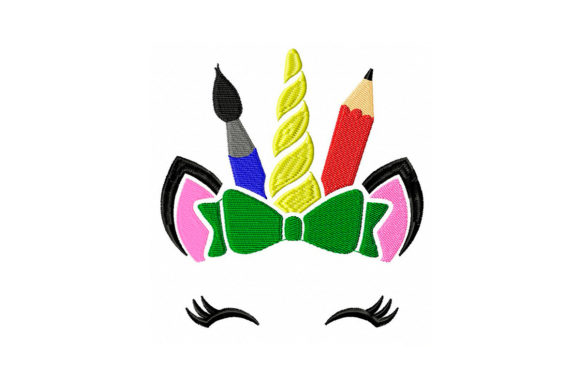
As an embroidery designer who’s prepped over 200 craft fair booths—and shipped thousands of machine embroidery designs to Etsy sellers and boutique makers—I took one look at The School Unicorn and smiled. It lands exactly where it needs to: bright but not childish, whimsical but grounded, nostalgic yet fresh. This isn’t a glitter-blasted fantasy creature—it’s a confident, friendly unicorn with clean lines and intentional charm. It feels modern-cute, not cartoonish; handmade-premium, not mass-produced. And yes—it reads instantly as Back To School without leaning on apples, rulers, or backpacks. That subtle intelligence is rare.
Where It Shines: Craft Fair Product Realities
In my booth setup—tote bags stacked, aprons hung on reclaimed wood racks, tea towels draped over ceramic bowls—The School Unicorn stands out most when placed on tote bag design and embroidered patch formats. Why? Because those are the items shoppers grab first, hold longest, and photograph for Instagram. A medium-sized The School Unicorn centered on a natural canvas tote reads clearly from six feet away. As a sew-on patch (3.5"–4"), it becomes an instant personality upgrade for backpacks, denim jackets, or market bags—ideal for teens and teachers alike.
On apron embroidery, it works beautifully above the pocket—not too big, not too small. On tea towel embroidery, it holds its own against textured cotton or linen blends, especially when stitched with matte cotton thread that complements fabric texture instead of fighting it. For pillow covers and small pouches, I’d recommend scaling down slightly—but only if the design maintains legibility in the horn and eye details. Avoid shrinking below 2.75" unless you’ve tested it thoroughly.
What Holds It Back (And How to Fix It)
The School Unicorn doesn’t have tiny lettering or micro-details—but it *does* carry moderate stitch density in the mane and tail swirls. That means: test on your target fabric *before* batching. Dense areas can pucker on lightweight knits or distort on thick terry cloth. For caps, use a low-profile underlay and avoid placing the design too close to the curve of the crown—otherwise, the horn may lift or lose definition.
Dark fabric? No problem—if your thread colors deliver enough contrast. But don’t assume “unicorn” means pastels. I’ve seen The School Unicorn pop brilliantly in charcoal thread on oatmeal linen, or deep navy on cream twill. The phrase *“you can choose the color scheme at your discretion”* is a gift—but also a responsibility. Mismatched contrast kills clarity faster than any stitch error.
Photography & Online Appeal
This design photographs exceptionally well—for printable mockup consistency and Etsy seller listings. Its balanced shape and clear silhouette mean it translates cleanly across lighting conditions and backgrounds. Unlike fussy, high-detail motifs, The School Unicorn avoids moiré patterns in photos and renders crisply even on mobile thumbnails. That’s huge for scroll-stopping power.
Production Practicality: Batch-Friendly, Booth-Ready
Yes—it’s repeatable. The clean outline, symmetrical flow, and absence of nested fill areas make The School Unicorn highly efficient for commercial embroidery runs. You’ll get consistent results across multiple hoop sizes—just confirm your preferred hoop size matches your production workflow. If you’re using a 4×4 hoop, this design fits comfortably. At 5×7, you gain breathing room for embellishment options (think subtle metallic accent thread in the horn).
Stabilizer choice matters more here than on simpler motifs. Use medium-weight cutaway for structured items like caps and pouches; tear-away works fine for stable weaves like tea towels and pillow covers. Always test on scrap fabric—especially with textured towels or slubby linen. What looks perfect on screen can blur or sink into loops and ridges.
Booth Impact & Buyer Engagement
At a crowded handmade market, The School Unicorn performs two quiet but powerful jobs: it invites touch and sparks conversation. Shoppers pause longer in front of embroidered totes featuring it—not because it’s loud, but because it feels *intentional*. That builds perceived value. It tells buyers: “This wasn’t slapped on. This was chosen, curated, and crafted.” That impression elevates every handmade product it appears on—from a $12 patch to a $48 pillow cover.
It also supports brand consistency. Whether you sell botanical prints or bold geometrics, The School Unicorn adapts. Pair it with earthy tones for a farmhouse booth, crisp whites and cobalt for modern-minimal, or candy hues for joyful pop. Its versatility makes it a smart anchor for seasonal collections—especially during Back To School launches, but also through fall gifting and teacher appreciation.
Designer Notes You Can’t Skip
- Always run a test stitch on your exact fabric—thread colors, tension, and stabilizer interact unpredictably.
- Review spacing between elements. Does the horn clear the mane? Does the eye read at 3 inches wide?
- Confirm commercial embroidery rights before selling finished products. The description says *“Make your things unique”*, but verify licensing scope for your business model.
- Create at least one real-life finished product mockup—not just digital. Lighting, drape, and hand-feel change everything.
- Compare how The School Unicorn looks on light vs. dark fabric swatches. Adjust thread saturation accordingly.
- Inspect stitch density in curved zones. High-density fills on rounded surfaces (like cap fronts) often need reduced density or added underlay.
Bottom line? The School Unicorn isn’t just another digital embroidery file. It’s a thoughtful, market-tested craft fair product engine—one that balances charm with craftsmanship, visibility with versatility, and playfulness with professionalism. Get it right, and it won’t just sell. It’ll start conversations, build loyalty, and earn repeat orders from customers who remember *exactly* where they found their favorite unicorn.