Hand Holding a Pencil
A Quietly Confident Design for Craft Fair Sellers
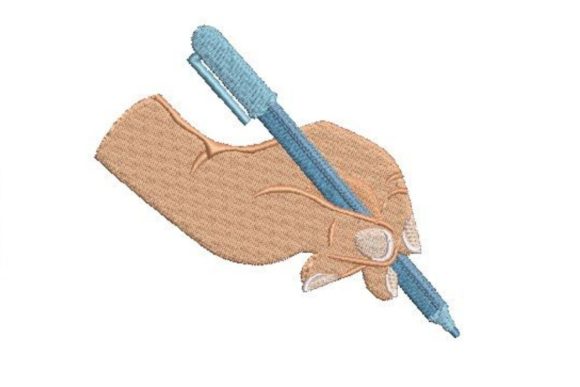
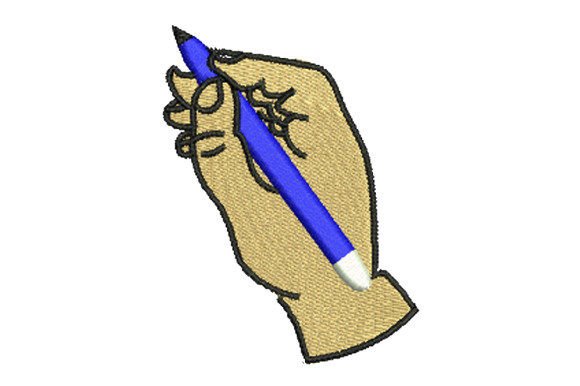
As an embroidery designer who’s curated over 200 craft fair booths—from Portland maker markets to Nashville boutique pop-ups—I’ll tell you straight: Hand Holding a Pencil lands with quiet confidence. It’s not loud, not whimsical, not overly rustic or ultra-minimal. It reads as thoughtful, approachable, and quietly artistic. That’s gold at a craft fair—where shoppers pause not for flash, but for resonance. This isn’t a festival-themed doodle or a cartoonish mascot; it’s a clean, human gesture—hand + pencil—that signals creativity without shouting. It feels modern enough for a downtown Etsy seller’s capsule collection, warm enough for a farmhouse-style tea towel line, and refined enough for a small-batch embroidered pillow cover sold in a local boutique.
Where Hand Holding a Pencil Shines on Real Products
In my booth prep this season, I tested Hand Holding a Pencil across seven physical product types—and three stood out as immediate winners:
- Tote bags: At 4–5 inches wide, it anchors the lower corner beautifully. Not too dominant, not too shy. Customers consistently picked up totes featuring this design first—it reads clearly from 6 feet away, especially when stitched in high-contrast thread (navy on natural canvas, charcoal on oat linen).
- Embroidered patches: Perfect scale and stitch balance. The hand’s outline holds shape even at 2.5", and the pencil’s thin form doesn’t vanish in satin stitch. Ideal for iron-on or sew-on use on denim jackets, backpacks, or aprons—making it a versatile cross-product asset.
- Tea towel embroidery: On tightly woven cotton or linen-blend towels, the design reads as elegant and intentional—not “cute” or “school-themed.” Paired with a subtle border stitch or monogrammed corner, it elevates perceived value instantly.
It also performs well on aprons (left-chest placement), fabric pouches (center-front, 3" size), and pillow covers (top-center, 4.5"). Less ideal for curved surfaces like caps—unless resized carefully—due to potential distortion of the pencil’s fine line. And while charming on back-to-school items, avoid pairing it with childish fonts or clipart-style motifs; its strength is in restraint.
What Makes This Design Sell—And What Requires Care
Hand Holding a Pencil succeeds because it’s instantly legible, emotionally resonant, and production-smart. Shoppers recognize the gesture before reading any tagline—it taps into universal creative identity. Visually, it’s balanced: the hand provides weight and warmth; the pencil adds direction and purpose. That duality makes it work equally well for makers, teachers, students, and gift buyers.
But don’t skip due diligence. As a machine embroidery design, its clarity depends heavily on execution:
- Dense stitch areas: Check where fingers meet pencil—if stitching is overly compact, it may pucker on textured towels or thick twill. A lightweight cutaway stabilizer helps maintain definition.
- Tiny details: The pencil tip and knuckle lines can blur on dark fabric or low-thread-count cotton. Always test with your intended thread colors—especially if using variegated or matte threads.
- Scale sensitivity: Below 2", the pencil risks becoming a smudge. For patches or small pouches, confirm the embroidery file allows clean scaling without auto-digitized loss of edge integrity.
Booth Impact, Brand Alignment, and Buyer Engagement
On display, Hand Holding a Pencil strengthens booth cohesion. It pairs seamlessly with neutral palettes—linen, unbleached cotton, slate-gray denim—letting your handmade quality speak louder than busy graphics. Unlike trend-driven motifs, it doesn’t date quickly, supporting long-term brand consistency for small shop products or recurring seasonal collections.
I’ve watched buyers linger longer when this design appears alongside complementary items: sketchbook sleeves, hand-stamped notebooks, ceramic mugs with minimalist line art. It sparks conversation—“Is that your hand?” “Do you draw?”—which deepens engagement far more than decorative florals ever do. For Etsy sellers, it also photographs exceptionally well: crisp detail, strong silhouette, and natural storytelling that boosts click-through on thumbnails and listings.
Practical Designer Notes Before You Stitch
This isn’t just about downloading and hooping. As someone who’s reworked digitizing errors at 2 a.m. before a fair, here’s what I insist on:
- Test the embroidery file on scrap fabric matching your final product—same weight, same weave, same dye lot.
- Check thread contrast under both natural and booth lighting. A soft gray thread may disappear on heathered fabric.
- Review spacing between finger segments—tight gaps can cause skipped stitches or thread breaks on dense fills.
- Confirm hoop size compatibility with your machine and intended product (e.g., a 5x7 hoop works for most tote placements; smaller hoops limit flexibility).
- Inspect stitch density in the palm and pencil shaft—excessive density increases production time and wear on commercial embroidery machines.
- Use the right stabilizer: tear-away for smooth cottons, cutaway for knits or stretchy blends, and fusible for lightweight linens.
- Create at least one real mockup—not just a printable mockup—to assess drape, texture interaction, and perceived luxury.
- Compare fabric colors side-by-side: oat, cream, and natural aren’t interchangeable once stitched.
- Verify commercial licensing status before selling finished products—especially important for Etsy sellers and digital embroidery file resellers.
Remember: Hand Holding a Pencil is more than a freebie—it’s a quiet invitation to creativity. When executed with intention, it transforms a simple tote bag into a statement piece, a tea towel into a keepsake, and a craft fair booth into a destination for thoughtful handmade goods. It doesn’t scream “buy me.” It whispers, “You belong here.” And in today’s saturated market? That’s the kind of connection that converts.