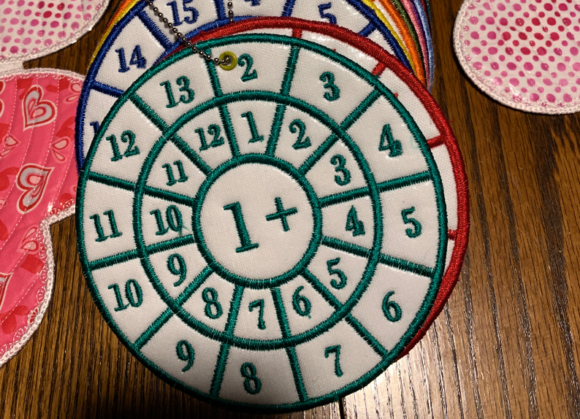
Addition Wheels 11 – 20
A Playful, Classroom-Ready Design with Real Business Potential
As an embroidery designer who’s developed and reviewed hundreds of digital embroidery files for small business merch, my first impression of Addition Wheels 11 – 20 is immediate: it’s bright, cheerful, and intentionally educational—without feeling sterile or overly academic. The title alone signals a clear purpose and audience: Back To School, early learning, and hands-on classroom engagement. But beyond the classroom, this machine embroidery design carries surprising versatility for creative small businesses—from bakeries using math-themed aprons (“2 + 3 = 5 fresh croissants!”) to pet brands stitching “11 + 9 = 20 tail wags” on tote bags. Its friendly energy reads as handmade and approachable, not corporate or generic. That’s gold for Etsy sellers, craft studios, and local shops building authentic brand identity.
Where Addition Wheels 11 – 20 Shines in Commercial Embroidery
This embroidery file works exceptionally well across multiple high-value small business applications. As an embroidered patch, it holds up beautifully at 2.5"–3.5" diameters—ideal for sew-on branding on denim jackets, canvas totes, or staff aprons. On caps, it reads clearly when placed on the front panel (not the curved bill), especially with bold thread colors that pop against dark fabric. For custom apparel like work shirts or boutique merchandise, Addition Wheels 11 – 20 makes a memorable chest accent—small enough to avoid overwhelming, large enough to spark conversation. It also translates smoothly to product packaging accents (think stitched labels on handmade soap boxes or craft kits) and event merch like reusable lunch sacks or teacher appreciation gifts. Because it’s rooted in playful learning, it naturally supports mission-driven brands—florists celebrating “12 roses + 8 sunflowers = 20 reasons to smile,” or cafés highlighting “11 + 9 = 20 daily brews.” That emotional resonance strengthens customer trust and buyer engagement far more than generic icons ever could.
Design Considerations for Real-World Fabric & Use
That said, Addition Wheels 11 – 20 isn’t universally plug-and-play—and that’s where professional embroidery insight matters. First, avoid scaling it below 2" diameter: tiny numbers and wheel outlines risk losing legibility, especially on textured fabric like twill or canvas. Cap fronts demand extra attention—test stitch-out on a curved cap blank before full production; subtle distortion can blur the wheel structure. Dark uniforms require high-contrast thread colors (e.g., white or neon yellow on navy); low-contrast combos weaken recognition and perceived professionalism. Also, check stitch density: if the design includes fine inner lines or tightly spaced numerals, it may need reduced density or simplified digitization for heavy-use items like aprons or tote bags that endure frequent washing. Always test on your actual fabric—not just stabilizer—and use cutaway or tear-away stabilizer appropriate for the base material’s weight and stretch.
Brand Identity & Visual Consistency Notes
Used thoughtfully, Addition Wheels 11 – 20 elevates rather than distracts from your brand identity. Its warmth and clarity reinforce authenticity—critical for handmade product positioning. Unlike clip-art-style graphics, this embroidery file feels intentional and crafted, subtly signaling quality to customers browsing your Etsy shop or boutique shelf. When paired with consistent typography and color palettes across your other design assets (e.g., matching your logo’s accent tones), it strengthens visual consistency without demanding uniformity. And because it’s inherently engaging, it invites interaction: parents pause at your café’s embroidered chalkboard sign, teachers recognize its pedagogical value on your workshop tote, kids point and count aloud. That kind of organic engagement builds recognition and loyalty faster than any slogan.
Essential Designer Checks Before Production
Before committing to bulk runs or client delivery, run these practical checks:
- Test in black and white first—to verify contrast and spacing without color distraction
- Confirm it scales cleanly at your target patch size (especially if producing 1.75" sleeve details or 3" cap fronts)
- Review thread color contrast on your actual garment fabric swatches—not just screen previews
- Inspect spacing between numerals and wheel segments; tight gaps may fill in during stitching
- Verify hoop size compatibility with your commercial embroidery machines
- Test on real fabric with your preferred stabilizer combo—canvas, denim, and twill behave very differently
- Create a printable mockup for client approval before digitizing or stitching
- Compare it beside your existing design assets—does it harmonize with your logo, fonts, and brand voice?
- Confirm commercial licensing before using in paid merchandise, wholesale orders, or resell products
Remember: the description mentions it “looks great embroidered throughout the classroom”—but your context is different. You’re not decorating walls; you’re building brand equity, supporting staff identity, and creating tactile, lasting impressions. Every stitch in Addition Wheels 11 – 20 should serve that goal.
Final Thought: A Smart, Scalable Asset for Purpose-Driven Brands
Addition Wheels 11 – 20 isn’t just another embroidery file—it’s a flexible, emotionally intelligent design asset. For small business owners, embroidery shops, and crafters, it bridges education and expression, playfulness and polish. Used with intention, it transforms everyday items into branded experiences: a teacher’s apron becomes a conversation starter, a florist’s tote tells a story, a bakery’s cap adds charm without clutter. Just remember—the strongest small business merch doesn’t shout; it connects. And Addition Wheels 11 – 20 does exactly that—with brightness, clarity, and quiet confidence.